
Kubernetes | Telemetry collection | Centralized logging
Kubernetes DaemonSet log collection: a practical guide for SecOps
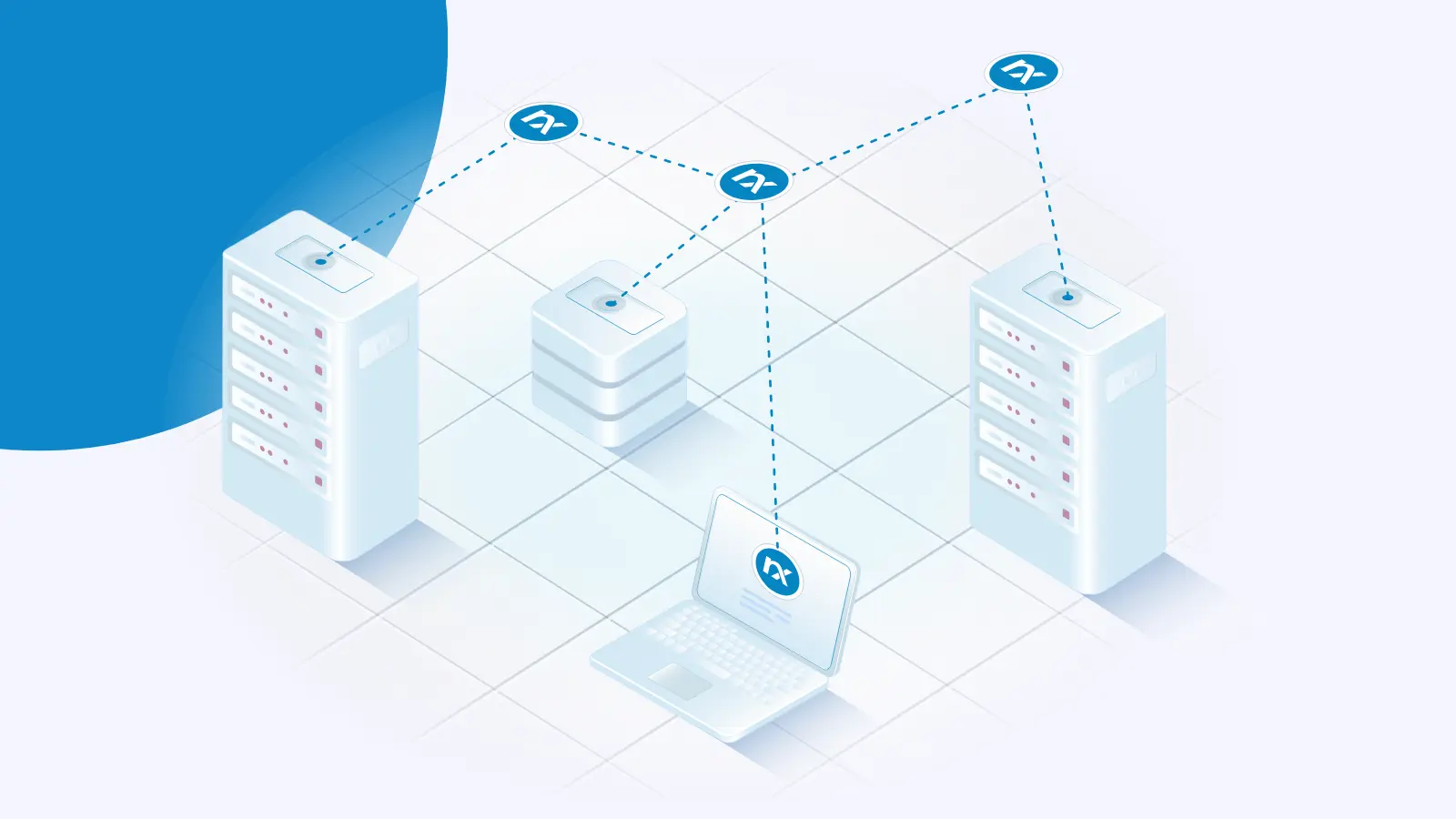
Kubernetes DaemonSet log collection runs one log-collector pod on every node in your cluster. The collector reads all container logs from the node’s /var/log/containers directory through read-only hostPath mounts and forwards them to your SIEM, with no changes to your application pods. When the cluster adds a node, the DaemonSet adds a collector, so coverage scales automatically.
This guide shows you how the pattern works, how Kubernetes writes container logs in 2026, and how to deploy NXLog Agent as a DaemonSet that ships container and audit logs to Microsoft Sentinel or Splunk.
syslog | Telemetry collection | Log forwarding
From journald to syslog: 4 ways to forward systemd journal logs
The major Linux distributions write their logs to the systemd journal: a binary, indexed, local-first store. However, your SIEM and collectors still expect syslog, which has been the plain text, line-oriented, network-native standard for more than four decades. If you run SecOps, you have to bridge that gap on every Linux host you monitor, and the obvious-looking switch, ForwardToSyslog=yes, moves nothing off the host by itself.
Quick answer: how to forward journald to syslog?
Telemetry pipeline management | Telemetry collection | Observability
Clean data: the foundation of AI-era security
The market has already answered whether telemetry is infrastructure. Cisco paid $28 billion for Splunk. Twelve days apart in 2025, CrowdStrike bought Spain’s Onum and SentinelOne moved to acquire Observo AI, both to embed AI-driven data pipelines directly beneath their platforms, while AI-native pipeline startups keep raising eight-figure rounds on the same thesis. When the largest names in security spend that kind of capital on the layer that collects, filters, and routes data, they are conceding something they rarely say out loud: detection, response, and every AI capability stacked on top are only ever as good as the pipeline underneath.
Fault tolerance | Telemetry collection | Telemetry pipeline management
Log shipper offline buffering: how to keep logs safe when the destination goes down
Offline buffering is a log shipper’s ability to store events in memory or on disk while the destination is unreachable, then forward them automatically once the connection recovers. Without it, every SIEM outage, network partition, or agent restart becomes a permanent gap in your security telemetry.
Every SIEM eventually goes down. So does the WAN link to your central collector, and eventually the host running the agent itself. None of these events should cost you log data, but whether they do depends on how your log shipper buffers when it can’t deliver data to the destination.
Windows | Telemetry collection | Telemetry auditing
USB device auditing on Windows: event IDs, tools, and blocking
USB device auditing on Windows means tracking three things: when a device connects, what files move to or from it, and whether your device-control policy stopped what it was supposed to stop. Windows can record all three. Almost none of it is enabled by default.
Honeywell’s 2025 Cyber Threat Report counted 1,826 unique USB-borne threats in the first quarter of 2025 alone, including 124 that were completely new. These findings came from Secure Media Exchange scanning stations at industrial sites.
Windows Event Collector | Windows Event Forwarding | Telemetry collection
WEC (Windows Event Collector) scaling limits: what breaks first, and what to do about it
A single Windows Event Collector (WEC) server has three documented scaling limits: disk write speed, concurrent WinRM connections, and registry growth from per-client bookmark data. Microsoft’s current guidance is to plan for roughly 3,000 events per second on average across all subscriptions on commodity hardware.
The "10k × 10k" rule of thumb (up to 10,000 clients and 10,000 EPS per collector) still circulates widely. IBM QRadar and Juniper JSA documentation still quote it, both attributing it to Microsoft’s article.
Windows | Telemetry collection | Telemetry auditing
Windows Task Scheduler event IDs: auditing scheduled task creation and abuse
Windows records scheduled task activity in two separate event logs. The Security log holds event IDs 4698-4702, covering task creation, deletion, turning on, turning off, and updates, with the full task definition XML attached. The Microsoft-Windows-TaskScheduler/Operational log holds event IDs 106, 140, and 141 for registration changes, plus 100, 200, and 201 for execution. Windows doesn’t switch on either source by default: Microsoft’s own Tarrask analysis states that "neither of these are audited by default and must be explicitly turned on by an administrator.

syslog | Telemetry collection | Log aggregation
Free syslog server and viewer: setup, limitations, and when to upgrade
You can centralize logs from firewalls, switches, and Linux hosts with a free syslog server - rsyslog, syslog-ng OSE, and the free plan of NXLog Platform all do the job. The real differences show up in Windows support, secure transport, viewers, and what happens when your environment grows.
A firewall, a switch, or an auditor says "send your logs somewhere," and there’s no budget line for it. A free syslog server solves the immediate problem in an afternoon.
Log analysis | Telemetry collection | Centralized logging
Firewall log analyzer: How to centralize and analyze firewall logs
Your firewalls already record allowed and denied connections and policy changes. Each vendor logs them in its own format. This post shows you how to get those records into one searchable structure, with working configurations for the most common sources.
A firewall log analyzer is a tool that collects logs from firewalls, parses each vendor’s log format into structured fields, and stores the results in one place for searching, alerting, and reporting.
Log analysis | Telemetry collection | Centralized logging
Server log analysis: collection, parsing, monitoring, and troubleshooting
Server log analysis turns the raw event records your Windows and Linux servers already produce into security detections, audit evidence, and troubleshooting answers. NXLog Agent and NXLog Platform provide that pipeline: collection and parsing at the source, centralized storage and search on top.
Every server you run writes down what happens to it: who logged in, which services started, what the web server returned, why a process crashed. Attackers know this too.
Windows | Telemetry collection | Telemetry auditing
Sysmon event IDs: what to collect for threat detection
Sysmon fills the visibility gaps that default Windows auditing leaves open — but only if you collect the right event IDs. Here’s the complete event ID reference, my recommended collection tiers for threat detection, and working configurations for getting Sysmon data off the endpoint with NXLog Agent.
Sysmon (System Monitor) is a free Microsoft tool — a Windows system service and device driver — that logs detailed system activity, such as process creation, network connections, and registry changes, to the Windows Event Log.
Telemetry collection | Log aggregation
Log collection tools: 5 options compared for security operations
Log collection tools gather event data from endpoints, servers, network devices, and cloud services, normalize it into a consistent format, and route it to a SIEM, a database, or long-term storage. This article compares five log collection tools: NXLog Platform, Splunk Universal Forwarder, Elastic Agent, Fluent Bit, and Vector. All five move logs reliably. The factors that determine a purchase are operating system coverage, where processing happens, which destinations each tool can feed to, and whether fleet management and storage are included or have to be assembled from separate parts.
syslog | Telemetry collection | Log aggregation
What is syslog? Ports, severity levels, and RFC 3164 vs. RFC 5424
Syslog is the standard protocol that devices, operating systems, and applications use to send event messages to a log collector. NXLog Platform collects, parses, and forwards messages in both BSD (RFC 3164) and IETF (RFC 5424) formats with a single extension.
Most security telemetry still travels as syslog at some point in its life. Firewalls, switches, Linux hosts, hypervisors, and a long list of security products emit it, and every major SIEM ingests it.
Telemetry collection | Telemetry pipeline management | NXLog Platform
5 Fluentd alternatives for security operations in 2026
The five Fluentd alternatives most worth evaluating for security operations in 2026 are NXLog Platform (collection agent, fleet management, and log storage in one product), Fluent Bit (the lightweight C collector from the same project family), Vector (a Rust pipeline built for high-volume transformation), OpenTelemetry Collector (the vendor-neutral CNCF standard), and Logstash (the Elastic Stack’s processing engine). Which one fits depends on your operating system mix, your throughput ceiling, and how many agents you need to manage.
Log analysis | Telemetry collection | NXLog Agent
Log enrichment with GeoIP: adding location context at the collection layer
A source IP address on its own answers almost none of the questions an analyst asks at triage. Did this login attempt come from a country where we have no users? Is the source a residential connection or a hosting provider? Log enrichment with GeoIP answers these questions before anyone has to ask them by resolving each IP address against a geolocation database and writing the results — country, city, coordinates, network owner — directly into the event record.
Telemetry collection | Log aggregation | syslog
Log timestamp normalization to ISO 8601: Getting every source to agree on time
When you reconstruct an incident across firewalls, endpoints, and application logs, the timestamps rarely agree. One source records Oct 10 13:55:36 with no year and no time zone. A Zeek log two racks over emits 1760104536.225121. The firewall already speaks 2025-10-10T13:55:36.003Z. Until every one of those is converted to a single format and time zone, your event timeline is an estimate.
The fix is timestamp normalization: convert each timestamp to ISO 8601 in UTC at the point of collection, before the data reaches your SIEM.
Financial services | Telemetry collection | Windows
The audit blind spot: collecting logs from mainframes and core banking systems your SIEM doesn't speak
Every telemetry vendor’s demo runs on the same infrastructure: a clean, cloud-native, container-friendly stack where a modern agent drops in and just works. Then you go back to the bank you run day to day, where a mainframe still clears transactions, an IBM i (AS/400) system has been in production for decades, and a core-banking platform speaks a log format no off-the-shelf agent has heard of. That gap between the demo and the data center is where audit blind spots live.
Telemetry collection | Telemetry pipeline management | NXLog Platform
6 Logstash alternatives and competitors for security operations in 2026
If you are looking for a Logstash alternative for security operations, six tools cover the field: NXLog Platform, an agent-based telemetry pipeline built for security data collection with centralized agent management; Fluentd, a CNCF project with a large plugin catalog; Fluent Bit, its lightweight C-based sibling for edge and container collection; Vector, a Rust-based pipeline owned by Datadog; Cribl Stream, a commercial pipeline for routing and reducing data between existing collectors and SIEMs; and syslog-ng, a long-lived syslog daemon from One Identity.
Telemetry collection | NXLog Agent
Structured logging and JSON conversion: Getting logs SIEM-ready at the source
Your detections, correlation rules, and search results are only as good as the underlying data structure. A raw log line is a string. A structured JSON event is a set of named fields you can filter, pivot, and alert on.
Convert your logs to JSON at the collection layer before they reach your SIEM. Doing it early cuts ingest cost, keeps your schema consistent across sources, and makes your detections less fragile.
Log analysis | Telemetry collection | Telemetry pipeline management
Log analysis tools for SecOps: How to evaluate the whole stack in 2026
Teams usually choose a log analysis tool by comparing vendors. The more costly decision sits one level up: the category of tool. The wrong choice there surfaces months later as a source you can’t collect, data you can’t normalize, or a per-gigabyte bill for logs you never needed.
Log analysis tools collect, parse, store, search, and visualize log data so teams can detect threats, investigate incidents, and troubleshoot systems. The term spans four distinct categories — collection agents, processing pipelines, storage and search engines, and analysis platforms — that each handle a different job in the same workflow.
Telemetry collection | Fault tolerance
How to handle log rotation without losing events
Log rotation is supposed to be routine maintenance. But if your collector reads a file while another process renames, truncates, or compresses it, events can slip through the gap — and you often won’t notice until you go looking for a log that isn’t there. For a security team, that gap is a blind spot: a detection that never fired, an audit trail with a hole in it, a control you can’t prove was working.
Telemetry collection | Telemetry pipeline management | Log aggregation
Fluentd vs Logstash: which log pipeline tool fits your stack?
Pick the wrong log collector and you pay for it on every node you deploy. A heavier agent multiplied across a thousand hosts is real memory and CPU you can’t get back, and a pipeline wired tightly to one vendor’s backend is hard to unwind later. So the Fluentd vs Logstash decision usually comes down to two questions: how much processing do you need at the collection point, and how committed are you to the Elastic Stack?
Telemetry collection | Telemetry pipeline management
Multiline log parsing with regex: Keeping multiline events intact for your SIEM
Most telemetry pipelines treat every newline as the end of an event. That assumption holds for a tidy syslog stream but breaks the moment a Java stack trace, a Python traceback, or a pretty-printed JSON payload lands in the file. One event becomes forty lines, and your SIEM ingests forty fragments instead of one record.
For a SecOps team, the cost is operational. Detection rules match on fragments or miss the event entirely, correlation loses the context that made the event worth alerting on, and the event count balloons against a volume-based license.
Windows | Critical infrastructure | Telemetry collection
From blind spot to monitored: Log collection for 32-bit Windows
At NXLog, we’ve been in the log collection space long enough to know that the toughest challenges aren’t technical but political. There’s always that Windows XP machine running the ATM firmware that no one can touch. Or the Windows Server 2003 box that keeps the conveyor belt running 24/7. Then there’s the industrial SCADA system installed before smartphones existed, quietly humming along in a corner of the plant floor.
Telemetry collection | OpenTelemetry | Observability | Elasticsearch | Grafana
Watching the agent watch you: Telemetry for OpenClaw with NXLog
Agentic AI is now embedded across the enterprise: summarizing customer records, pulling from data warehouses, drafting on top of internal documents, calling production APIs on behalf of staff. The pitch is compelling. The reality is that you have deployed a non-deterministic process with read access to PII, trade secrets, and the business intelligence your competitors would pay for. It is a black box that reasons differently on each run, and a single misrouted tool call can move sensitive data into a context where it does not belong.
Telemetry collection | Kubernetes | OpenTelemetry
Fluent Bit vs Logstash: which pipeline fits your stack?
Fluent Bit wins on footprint. Logstash wins on parsing depth. The choice isn’t which tool is "better" — it’s where in your pipeline each one earns its keep, and what your detection tier silently misses when you put one in the wrong tier.
Pick wrong and the cost shows up in three places: detection latency when batches stall, audit evidence when collectors stop shipping, and MTTR when responders can’t tell whether a quiet endpoint is an attack indicator or a broken agent.
Infrastructure monitoring | Telemetry collection | NXLog Platform
Network performance monitoring: metrics vs syslog logs vs traps
Every application depends on the network, yet networks are often the hardest part of the stack to diagnose when something goes wrong. Devices are up, utilization looks normal, and yet users report slowness or disconnections with no obvious cause in sight.
The instinct is to rely on metrics alone: poll devices at regular intervals, watch the dashboards, set thresholds. That approach catches obvious outages, but it struggles with the harder questions: Why did latency spike when nothing looked congested?
Windows | Telemetry collection | Telemetry auditing
From 4688 to 1102: The Windows event IDs that matter for threat detection
Most Windows detection programs are anchored on a small set of well-known event IDs: 4624, 4625, maybe 4688 if process creation auditing is turned on. The events that actually describe an intrusion (the new service, the scheduled task, the explicit credential, the share enumeration) live elsewhere on the same host, often on channels that are not enabled by default. We have written before about why a 4625-only mindset leaves most of the attack chain in the dark; this post is the catalog that picks up where that argument ended.

Telemetry collection | Telemetry pipeline management | Log aggregation
Filebeat vs Logstash: when the shipper is enough and when you need a pipeline
The choice here is not between two interchangeable log tools. It is a choice about where you want parsing, routing, and failure handling to live. Filebeat runs close to the source and keeps collection small. Logstash sits in the middle of the flow and takes on filtering, enrichment, and fan-out.
That architectural difference matters more than a feature checklist. Pick the narrower tool when your logs have one destination and your parsing rules are modest.
Windows | SCADA | Critical infrastructure | Telemetry collection
The case for not ripping and replacing: Securing Win32 infrastructure in place
The default advice for any system running an unsupported operating system is simple: replace it. Upgrade to a supported platform. Move to modern hardware. Problem solved.
It’s good advice in theory. However, as with many other things in life, in practice it ignores everything that makes legacy infrastructure hard to deal with in the first place.
For organizations running Windows XP, Server 2003, or other legacy 32-bit Windows systems, "just upgrade" is often the most expensive, disruptive, and operationally risky option on the table.
NIS2 | HIPAA | PCI DSS | Windows | Telemetry collection | Telemetry auditing
NIS2, HIPAA, PCI DSS: What compliance means when you can't upgrade your OS
Compliance frameworks don’t have a checkbox for "we know it’s a problem, but we can’t afford to fix it right now." Yet that’s the position thousands of organizations find themselves in — bound by regulation to meet security standards that their operating systems are physically incapable of supporting.
If you run Windows XP, Server 2003, or any other unsupported OS in a regulated environment, the compliance obligation doesn’t go away just because the upgrade path is blocked.
Centralized logging | Telemetry collection
Centralized log management: What it is, how centralized logging works, and how to choose the right system
Centralized log management is the practice of collecting logs from across an environment, including applications, servers, containers, networks, and cloud services, and storing them in a single location where they can be searched and analyzed.
For operations and security teams, centralized logging is now a core requirement. Without it, logs are scattered across hosts, ephemeral containers, cloud consoles, and disconnected tools. This fragmentation slows troubleshooting, complicates incident response, and limits visibility during security investigations.
Telemetry collection | Elasticsearch | Kibana
From network event logs to insights: Visualizing OpenVPN logs with Elasticsearch and Kibana
At NXLog, we help customers solve real-world telemetry data challenges and bring value to the table with NXLog Platform. One of the recurring problems we see is that while network event logs contain a wealth of information, turning them into actionable insights isn’t straightforward. Security operations teams often struggle to make sense of these logs in a way that directly supports threat detection, response, and investigation.
A perfect example of this challenge is VPN logs.
Telemetry auditing | Telemetry collection
Security Event Logs: Importance, best practices, and management
Understanding security event logs for stronger cybersecurity.
Whether a multinational corporation or a small business, organizations face ever-increasing risks of data theft, insider threats, and system intrusions. In 2025, the security landscape is further complicated by the growing influence of artificial intelligence, as cybercriminals are leveraging AI to enhance the sophistication and scale of attacks. One of the most powerful tools for detecting and responding to attacks is the humble security event logs.
Telemetry collection
Leveraging Okta logs for improved security monitoring
Most corporate environments require a login, and Identity and Access Management (IAM) is a solution that helps manage that process in different ways. IAM ensures that only the necessary people can access the relevant IT resources.
Each user, device or service is assigned a unique digital identity. So, when an employee logs into a company system, IAM confirms that person’s identity. This might involve a login/password check, multi-factor authentication, or both.
Telemetry collection
Ingesting log data from Debian UFW to Loki and Grafana
An excellent way to get started in a new technology area or refresh our knowledge is to devise a solution based on a small idea or need. This blog post covers such a situation, with a small personal project demonstrating how to use NXLog’s powerful features.
I embarked on a small pet project centered around a cloud machine running Debian 10. It connects telemetry from my home, country house, and notebook.
NXLog Agent | Telemetry collection
NXLog Agent on Submarines
I always wondered what happens to our software when a company purchases it. Okay, I know they will install it and use it. But where do they install it? On what kind of machines? In what kind of environment? And why is it important for them to collect and handle logs? The possibilities are endless. We have customers worldwide; from shoemakers to telecom companies, NXLog is everywhere. But where are the most remarkable places NXLog Agent is employed?
Telemetry collection
The evolution of event logging: from clay tablets to Taylor Swift
Event logs are our breakfast, lunch, and dinner at NXLog. Before NXLog, I worked on an API that collected software usage logs. And before that, on a centralized log management application. Today, after a career of dealing with logs, I wondered, "How did our world come to rely so much on event logging?"
I mean, in the vast landscape of technological progress, the history of event logging is only a minor subplot.
Telemetry auditing | Telemetry collection
GLBA Compliance in 2024 - Reporting directly to the FTC
The U.S. Federal Trade Commission (FTC) approved amendments to its Safeguards Rule that require FTC-regulated non-banking financial institutions to report data breaches and other security events directly to the FTC. It was originally proposed to add a breach notification requirement back in late 2021. The rule requires financial institutions to report “notification events” to the FTC within 30 days of discovery of the notification event where the private information of 500+ consumers is involved.
Critical infrastructure | Telemetry auditing | Telemetry collection
Log management for maritime cybersecurity compliance regulations
Historically, seaports have played a crucial role in a state’s development, and interruption in their services has a significant impact on economics. So, it’s no surprise commercial ports are regarded as a critical transport infrastructure.
One of the most significant challenges ports face today is ongoing digital transformation. The majority of tasks carried out across a port utilize autonomous and partially automated systems, including those for managing port access, vessel berthing (bridges, locks, gates, etc.
Telemetry analysis | Telemetry collection
Detect threats using NXLog and Sigma
The analysis of events produced by various systems and applications can offer insights into the infrastructure health and the operational resilience of an enterprise. From an Infosec perspective, the end-goals are: threat detection, forensics and remediation.
However, we can’t query or analyse data that we haven’t collected in the first place! Before threat hunting and incident response are even possible, security events need to be collected from various sources, parsed, transformed, and then forwarded to data sinks such as security information and event managements (SIEM), security analytics platforms, cloud ecosystems and long term storage.
Centralized logging | Telemetry collection
Looking beyond Cybersecurity Awareness Month
Cybersecurity Awareness Month has come and gone again. October marks that festive time of year when companies circulate their mandatory think pieces, remind their employees of the dangers of clicking questionable links, and pat themselves on the back and call it a day. Here’s your friendly November reminder to keep your wits about you year-round.
A (brief) history of Cybersecurity Awareness Month The Cybersecurity Awareness Month story began as a partnership between an American governmental agency—the Cybersecurity and Infrastructure Agency (CISA)--and the National Cyber Security Alliance non-profit.
NIST | Telemetry collection
Assertive compliance - using frameworks to extend your coverage
So, it happened again. You got an internal audit finding or a regulatory notice. Or you just had a nagging feeling and found customer data somewhere it shouldn’t have been. Morale sinks. Are you forced to choose between serving your customers and addressing compliance weaknesses? Nobody said IT Compliance was easy. But don’t sign up to do any more work than is necessary. Use Frameworks to identify the activities, like logging, that demonstrate compliance for multiple domains and get the absolute best coverage without extra work.
Telemetry collection | DNS | Windows
The disappearing Windows DNS debug log
The Windows DNS debug log contains valuable information on DNS queries and activity that is especially useful for monitoring and analyzing malicious traffic. This requires some configuration changes for the DNS service in order to enable debug logging.
Here is a short description on how to enable debug logging for the DNS service on windows, this also applies to Windows Server 2008 and later. It is possible to specify the file and path name of the DNS debug log file as well as the maximum size of the file.
Windows | Telemetry collection
Security logging on Windows - beyond 4625
As a security administrator, you may be inclined to focus on the Windows Security log within Windows Event Log. You might even go as far as filtering for specific event IDs, such as EventID 4625 (failed logon request), while forgetting there is much more to security logging on Windows than this single log source.
The consequence of this narrow field of view is that you are not benefitting from the valuable information that other Event IDs used for security audit policies can offer.
Telemetry auditing | Telemetry collection
How NXLog can help meet compliance mandates
Compliance mandates are frameworks that organizations must implement to meet industry regulations. Some of these mandates provide guidelines and best practices, while others may be tied to legislation. With the constant and rapid changes in technology, ensuring that your organization adheres to the relevant regulations is an ongoing process.
So why should you comply? Simply put, not complying might cost you more than implementing processes to meet regulatory requirements. By not complying, you might be violating the law, and in case of a data breach, you may face litigation from affected parties.
Telemetry collection
How to prevent and detect Log4j vulnerabilities
The Apache Log4j vulnerability has attracted a lot of media attention as a result of recent security incidents that were reported by some organizations using versions 2.0-beta9 through 2.14.1. This security flaw has the potential to affect thousands of applications since some of the world’s largest databases rely on Log4j.
Because so many organizations are affected, cybercriminals are actively exploiting this well-known vulnerability.
Why is this so dangerous? In addition to the threat of malware and ransomware, hackers can also perform remote code execution due to the Log4j vulnerability.
Telemetry collection | DHCP | Telemetry auditing | Windows | Event Tracing for Windows
Collecting DHCP server logs on Windows
DHCP server log collection made simple DHCP (Dynamic Host Configuration Protocol) is a network management protocol that dynamically assigns IP addresses to each client machine on your network. However, its importance does not stop there. DHCP can even generate numerous critical events that indicate your network’s security has been compromised.
You might then wonder how you can use these events to safeguard your organization from intrusion. Well, these event logs store valuable information that contain the ID and IP address associated with each client.
Kubernetes | Telemetry collection | Integrations
Collecting Kubernetes logs with NXLog
Kubernetes is nowadays the de facto standard for the deployment and management of containerized applications. A Kubernetes deployment may contain hundreds, if not thousands, of nodes and pods. As with any other system, collecting logs from your Kubernetes environment is imperative to monitor the health of your cluster and to troubleshoot issues when they arise. In this post we will explore the logging challenges that Kubernetes poses, and how NXLog can be a key player in your logging solution.
Telemetry collection
File-based logs? Yes, they're still being used!
File-based logs are where it all began. These logs can yield information of great value to security analysts and administrators alike. Armed with this information, IT professionals are better equipped to troubleshoot issues, evaluate system performance, identify bugs, and even detect security breaches.
In today’s world, we tend to focus on the modern, integrated logging facilities like Microsoft’s Windows Event Log or Apple’s Unified Logging System (ULS). However, all the major operating systems still generate log files that may or may not be integrated into these logging facilities.
Windows | Telemetry collection
Top 5 Windows Security logs everyone should collect
It goes without saying that across your business infrastructure, there should be a commitment to protect not only the hardware and software assets, but the plethora of data that is transmitted through and stored in it. However, to successfully safeguard such data, it is imperative to have an effective audit policy in place that includes the collection of security events as its essential component.
Windows provides a wealth of security logs that are visible in the built-in Security channel of Event Viewer.
Windows | Telemetry collection
Windows Event Log collection in a nutshell
Unquestionably, Microsoft Windows is the number one desktop operating system in the world, as well as having a significant share of the server operating system market. Multi-million-dollar organizations rely heavily on Windows Server and Active Directory to provide a safe, secure networked environment for their business operations. Such an enterprise infrastructure alone can generate thousands of events per second that range anywhere from benign user authentication events to logs indicating a severe software failure, or even more serious events such as DoS attacks or intrusion attempts.
Telemetry collection | Modbus | Incident Command System | Integrations
Flexible, cloud-backed Modbus/TCP log collection with NXLog and Python
Modbus is a simple and flexible protocol used by a wide variety of industrial and automation equipment. Its simplicity has made it attractive for many manufacturers, but it also poses a number of challenges in terms of security and traffic analysis. In this post, we’ll show you how to use NXLog to capture, process, and extract useful security information from Modbus traffic.
What makes Modbus traffic analysis challenging? Modbus is a low-level protocol that effectively uses only two data types: bits (in the form of coils), and 16-bit words (in the form of registers), which are also the only form of data that can be natively addressed with most devices.
Windows | Windows Event Forwarding | Windows Event Collector | Linux | Telemetry collection
Setting up a Windows Event Collector (WEC) on Linux
Windows Event Forwarding (WEF) is a service available on Microsoft Windows platforms which enables the forwarding of events from Windows Event Log to a central Windows Event Collector. Since the technology is built into the operating system, this means you can centralize log collection without having to install third party software on each Windows node. You can also use Group Policy for configuring clients to forward their events. This approach not only standardizes client management but also streamlines it.
Telemetry collection | DNS
DNS Log Collection and Parsing
DNS Log Collection and Parsing DNS log collection and parsing should be part of the log collection strategy of every modern IT infrastructure. There are numerous reasons why you should be concerned enough to collect as well as parse the DNS logs collected, some of which include:
Operations and Support Parsing DNS server logs can be used to track active DNS clients, while parsing complex and noisy logs can be helpful in troubleshooting support issues.
Telemetry collection | DNS | Windows
DNS Log Collection on Windows
Be sure to read Part 1 and Part 3 of our DNS Log Collection series, in case you missed them.
DNS Log Collection on Windows If you need to reduce the cost of DNS security and increase efficiency through centralizing DNS log collection, where would you start? Answering this question requires knowledge and awareness of the challenges and opportunities available on the Windows platform.
While Windows DNS server is a common technology serving many types of organizations, from local domains to large multi-site enterprises, the possibilities are not necessarily that well-known within the context of comprehensive, site-wide log collection.
Telemetry collection | DNS | Linux
DNS Log Collection on Linux
Be sure to read Part 1 and Part 2 of our series in case you missed them.
DNS Log Collection on Linux In the third, closing part of our series on DNS log collection, we discuss DNS logging on Linux using open source software. From the numerous open source DNS server implementations available, we tried to include the more popular ones and summarized what is involved in collecting logs from them.
FIM | Telemetry collection
What is File Integrity Monitoring (FIM)? Why do you need it?
About File Integrity Monitoring (FIM) File integrity monitoring is implemented as a detection mechanism to monitor changes to important files and folders. File integrity monitoring is largely used as a security measure for detection and for meeting obligations such as compliance. By using file integrity monitoring, better control measures can be taken due to being able to track and provide data for alerts of activities on assets that are being monitored, such as potential unauthorized changes.
Agent-based telemetry collection | Agentless telemetry collection | Telemetry collection
Agent-based versus agentless log collection - which option is best?
One of the harder decisions revolve around implementing agent-based vs agentless log collection. This post covers the two methods - their advantages and disadvantages - and provides some quick and actionable implementation notes.
Why does log collection agent choice matter? When deploying a log collection strategy, administrators usually tend to zone in on already selected solutions that answers fundamental questions, such as "Will this solution collect and ship these types of log sources?
Follow us



© Copyright NXLog Ltd.