
Kubernetes | Telemetry collection | Centralized logging
Kubernetes DaemonSet log collection: a practical guide for SecOps
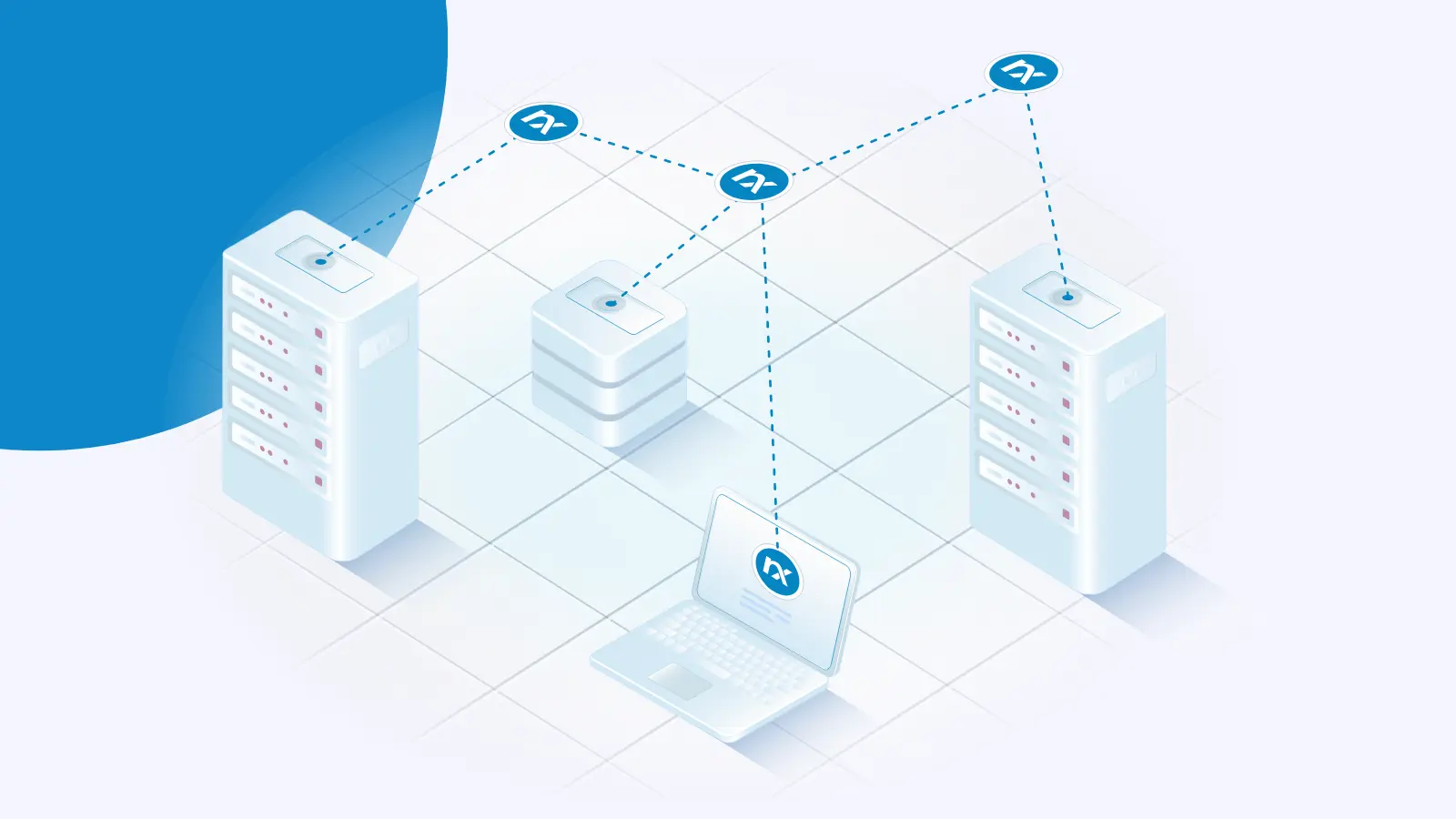
Kubernetes DaemonSet log collection runs one log-collector pod on every node in your cluster. The collector reads all container logs from the node’s /var/log/containers directory through read-only hostPath mounts and forwards them to your SIEM, with no changes to your application pods. When the cluster adds a node, the DaemonSet adds a collector, so coverage scales automatically.
This guide shows you how the pattern works, how Kubernetes writes container logs in 2026, and how to deploy NXLog Agent as a DaemonSet that ships container and audit logs to Microsoft Sentinel or Splunk.
Kubernetes | Docker | Centralized logging
Containerized log collection: how to capture Docker and Kubernetes logs before they disappear
Key takeaways
Container logs share the container’s lifecycle. The Kubernetes documentation states that when a pod is evicted from a node, it removes the containers along with their logs.
Container lifespans keep shrinking. Sysdig’s 2025 Cloud-Native Security and Usage Report found that 60% of containers live for 60 seconds or less. Collection has to be continuous, not scheduled.
A node-level agent (a DaemonSet on Kubernetes) covers every container on a node without changing your applications.

Telemetry collection | Kubernetes | OpenTelemetry
Fluent Bit vs Logstash: which pipeline fits your stack?
Fluent Bit wins on footprint. Logstash wins on parsing depth. The choice isn’t which tool is "better" — it’s where in your pipeline each one earns its keep, and what your detection tier silently misses when you put one in the wrong tier.
Pick wrong and the cost shows up in three places: detection latency when batches stall, audit evidence when collectors stop shipping, and MTTR when responders can’t tell whether a quiet endpoint is an attack indicator or a broken agent.
NXLog Platform | Kubernetes
Deploying NXLog Platform on Kubernetes with Helm
NXLog Platform can now be installed using the official Helm chart, following the same Kubernetes deployment standard as any other enterprise Kubernetes application. Red Hat OpenShift is also fully supported using native OpenShift Routes.
According to the CNCF 2025 Annual Cloud Native Survey, 82% of container users run Kubernetes in production, and 81% prefer Helm as their package manager of choice. Kubernetes adoption spans every major cloud provider and distribution, including GKE (32%), AKS (17%), OpenShift (13%), and Amazon EKS, and continues to grow as the default substrate for enterprise infrastructure.

Kubernetes | Telemetry pipeline management
Fluent Bit vs Filebeat: Architecture, trade-offs, and the better default
If you are choosing between Fluent Bit and Filebeat, the real question is where you want routing, parsing, and failure handling to live. Pick the wrong default, and you create config sprawl, brittle pipelines, and extra work every time your backend or deployment model changes.
Choose Fluent Bit when the agent itself needs to behave like a small pipeline, and choose Filebeat when your log path ends inside Elastic and you want the shipper to match Elastic’s operating model.
Kubernetes | Telemetry pipeline management
Fluent Bit vs Fluentd: How to choose the right tool for your log pipeline
Choosing between Fluent Bit and Fluentd is an architecture decision, not a product shootout. Both projects live under the CNCF Fluent umbrella and share a common lineage at Treasure Data, but they target different roles in a logging pipeline. Fluent Bit is a C-based telemetry agent designed for low-overhead collection at the edge. Fluentd is a Ruby-and-C data collector built for aggregation, transformation, and multi-destination routing.
The practical question is not which one is better — it’s where each one belongs in your stack, and whether you need both.
Kubernetes | Telemetry collection | Integrations
Collecting Kubernetes logs with NXLog
Kubernetes is nowadays the de facto standard for the deployment and management of containerized applications. A Kubernetes deployment may contain hundreds, if not thousands, of nodes and pods. As with any other system, collecting logs from your Kubernetes environment is imperative to monitor the health of your cluster and to troubleshoot issues when they arise. In this post we will explore the logging challenges that Kubernetes poses, and how NXLog can be a key player in your logging solution.
Follow us



© Copyright NXLog Ltd.